Most Snowflake cost programs start reactive, reviewing spend after the bill arrives. The best ones become proactive, preventing waste before it accumulates. This maturity model helps teams understand where they are today and what it takes to reach the next level.
Stage 1: Reactive Discovery
At Stage 1, teams notice Snowflake costs after receiving the monthly invoice. Investigations are manual. There is no ongoing monitoring, no tagging strategy, and no ownership assignment. Signs you are at Stage 1: Snowflake bills consistently exceed forecasts, cost investigations start with who spent this rather than what changed, and there are no alert thresholds.
Stage 2: Basic Visibility
Stage 2 introduces warehouse-level monitoring and basic dashboards. Teams can see which warehouses consume the most credits. Moving to Stage 2 requires setting up ACCOUNT_USAGE dashboards, tagging warehouses with team names, and assigning a FinOps champion who reviews spend weekly.
Stage 3: Workload Attribution
Stage 3 adds query-level attribution. Teams can identify which dbt models, dashboards, or pipelines drive the most credit consumption. Tagging strategies are consistent. Showback reports go to team leads monthly. Key capabilities include query tagging by team and workload, per-model attribution for dbt, and formal ownership assignment for each warehouse and pipeline.
Stage 4: Proactive Governance
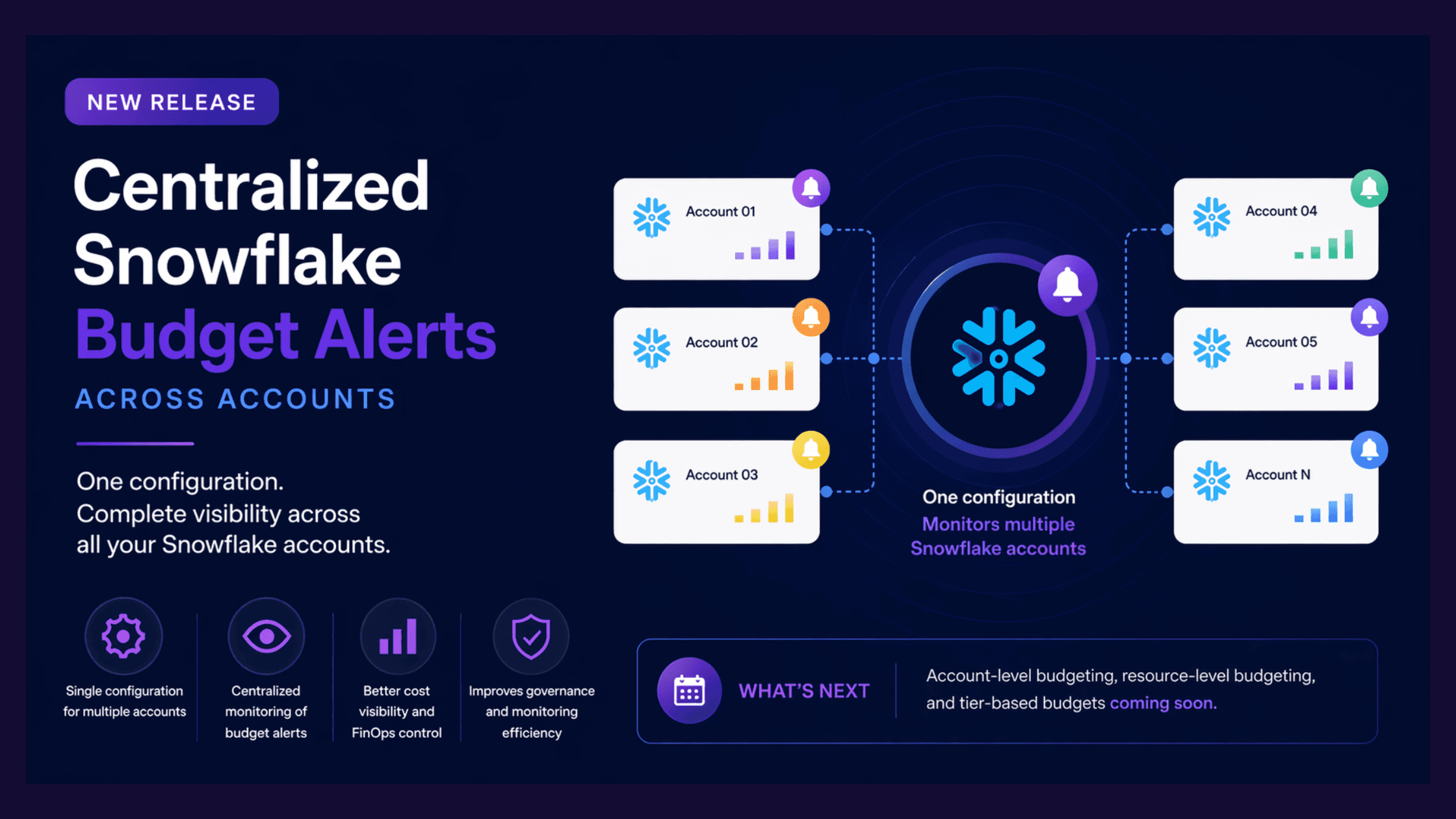
Stage 4 introduces budget controls and automated alerts. Teams receive notifications before exceeding budgets. Resource monitors enforce credit limits. Query simulation validates optimization changes before production deployment. Organizations at Stage 4 prevent most cost spikes before they occur.
Stage 5: Closed-Loop Optimization
Stage 5 is fully automated: anomaly detection triggers alerts, ownership is assigned automatically, optimizations are simulated and validated, and savings are documented with proof. Cost governance is a continuous process, not a quarterly review. Snowflake costs grow proportionally with business value, not with engineering complexity.
Accelerate your Snowflake FinOps maturity with Anavsan
APEX moves teams from Stage 2 to Stage 4 and beyond by automating attribution, anomaly detection, and optimization documentation without requiring a dedicated FinOps team.